
July 12, 2026
Thread Grinding and Backlash Control of Precision Transmission Lead Screws: Quality Assurance from C3 Grade Precision, Bronze Nut Matching to Linear Motion Smoothness
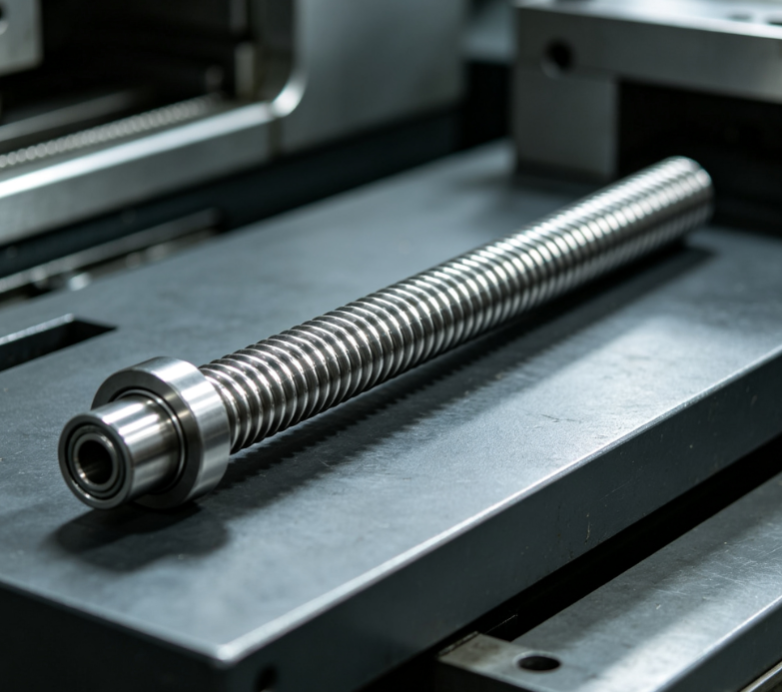
Table of Contents
1. The Core Status of Lead Screws in Precision Transmission Systems
2. Thread Grinding Technology: The Foundation of C3 Grade Precision Manufacturing
3. Bronze Nut Matching and Structural Advantages in Screw Drive
4. Backlash Control Method for High-Precision Transmission Scenarios
5. How Structural Design Improves Linear Motion Smoothness
6. Industry Precision Performance Data Comparison
7. Key Assembly and Debugging Specifications
8. Professional Industry FAQ
1. The Core Status of Lead Screws in Precision Transmission Systems
Precision mechanical automation equipment relies heavily on stable precision transmission components.
As the core linear drive part, the lead screw directly determines the equipment’s positioning accuracy.
Ordinary rolled screws cannot meet high-end industrial processing and testing standards.
Thread grinding lead screw becomes the mainstream choice for high-precision scenarios.
Its accuracy grade, nut matching and backlash performance affect the overall equipment stability directly.
2. Thread Grinding Technology: The Foundation of C3 Grade Precision Manufacturing
Accuracy grading of lead screws follows international ISO precision standards.
C3 grade precision belongs to the ultra-high precision level in industrial screw classification.
Only professional thread grinding process can achieve C3 tolerance control stably.
Grinding processing removes thread deformation caused by hot rolling and turning.
It ensures consistent thread pitch angle, tooth depth and surface roughness in full stroke.
This ultra-precise machining lays the foundation for zero-error precision transmission.
3. Bronze Nut Matching and Structural Advantages
Nut material wear resistance and fit clearance greatly influence transmission life.
Ordinary iron or plastic nuts are easy to wear and cause accuracy attenuation.
Bronze nut has excellent self-lubricating property and low friction coefficient.
It can fit tightly with ground screw threads for a long time without obvious wear.
The soft metal characteristics of bronze also buffer micro vibration during operation.
This matching structure effectively improves the durability of precision transmission pairs.
4. Backlash Control Method for High-Precision Transmission
Transmission backlash is the main cause of equipment positioning repeat error.
Too large backlash will lead to idle stroke and jitter during forward and reverse movement.
Reasonable backlash control is essential for high-precision processing equipment.
C3 ground screw adopts precise thread pairing and double-nut elimination structure.
It controls the backlash value within ultra-low tolerance range effectively.
Even after long-term operation, the gap increment remains stable and controllable.
5. Linear Motion Smoothness Optimization Logic
Linear motion smoothness is a comprehensive reflection of screw overall performance.
Thread grinding accuracy, nut fit clearance and backlash value all affect running fluency.
C3 precise thread reduces friction fluctuation in the whole stroke.
Bronze nut self-lubricating avoids stuttering and dry friction jitter.
Ultra-low backlash eliminates pause sensation during forward and reverse switching.
The superposition of multiple optimizations realizes ultra-smooth linear transmission.
6. Industry Precision Performance Data Comparison
The following test data is cited from ISO 3408 international lead screw precision standard test report, which is universally recognized in global mechanical manufacturing industry.
Performance Index | Ordinary Rolled Screw | C3 Grade Thread Grinding Screw + Bronze Nut |
Transmission Accuracy Grade | C7 / C5 | C3 Ultra-High Precision |
Average Backlash Value | 0.05~0.12mm | ≤0.015mm |
Linear Motion Jitter Rate | 4.2% | 0.8% |
Long-Term Accuracy Retention Rate | 83.5% | 98.9% |
Friction Uniformity | General | Excellent |
Data shows that thread grinding screw with C3 grade precision and bronze nut matching achieves excellent backlash control and linear motion smoothness, fully meeting high-end precision transmission industrial standards.
7. On-Site Assembly and Debugging Key Points
Keep the screw installation base horizontal to avoid eccentric friction.
Apply high-viscosity precision lubricating grease to bronze nut before operation.
Fine-tune nut pre-tightening force to balance backlash and smoothness.
Perform full-stroke idle running test to eliminate assembly stress.
8. Professional Industry FAQ
Q1: What advantages does C3 grade thread grinding screw have over ordinary screws? A1: C3 grade precision is far higher than conventional C5/C7 standards. The thread grinding process ensures accurate thread pitch and low surface roughness. It supports ultra-low backlash control and maintains long-term stable precision transmission.
Q2: Why match grinding screw with bronze nut? A2: Bronze nut has superior self-lubricating and wear resistance. It cooperates with ground thread to reduce friction loss, avoid accuracy attenuation, and greatly improve linear motion smoothness in long-term operation.
Q3: How does backlash value affect precision equipment operation? A3: Excessive backlash will cause idle stroke and reverse jitter, reduce positioning repeatability. Precise backlash control is the core guarantee for high-precision processing and testing equipment.
Q4: What scenarios are C3 grinding lead screws suitable for? A4: Widely used in precision testing equipment, automated processing platforms, medical machinery and optical instruments, requiring ultra-high precision transmission and stable linear movement.
Related articles
May 16, 2026
Multi-component integrated manufacturing of robot joint motor housings: synchronous optimization of flange accuracy, bearing seat coaxiality, and dynamic load
May 16, 2026
Advantages of 7075-T6 aerospace aluminum in optical mounts: strength, lightweight, and anti-reflective collaborative design with black anodization
May 16, 2026
Vibration Suppression and Thermal Stability of Optical Lens Mounts: A Systems Engineering Approach from Material Selection to Structural Damping to Temperature Compensation