
May 16, 2026
Multi-component integrated manufacturing of robot joint motor housings: synchronous optimization of flange accuracy, bearing seat coaxiality, and dynamic load
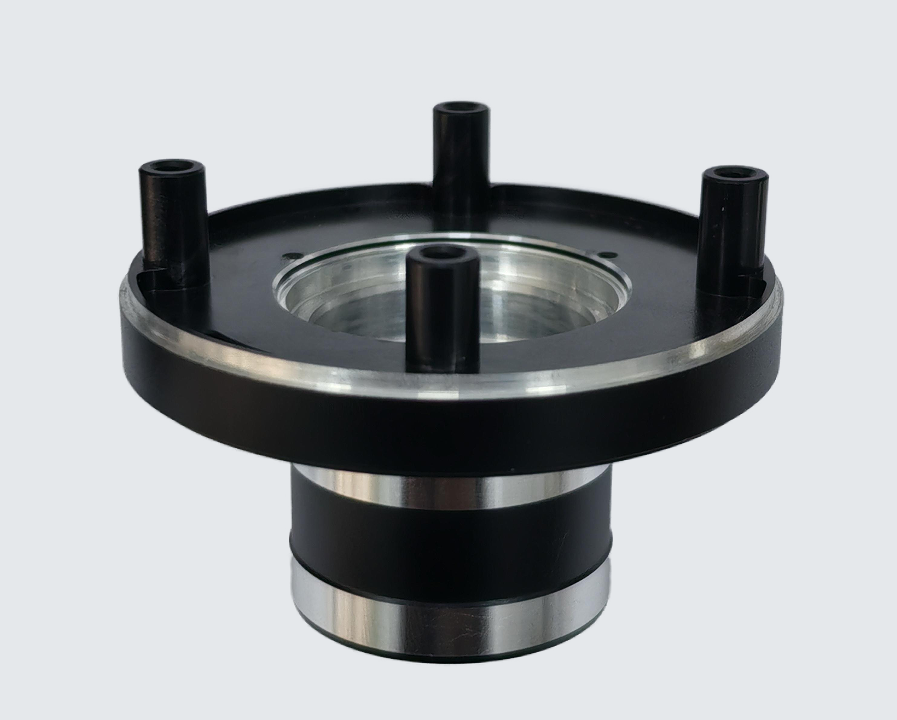
Table of Contents
1. Introduction: 7075-T6 Aerospace Aluminum and Optical Mounts
2. Overview of 7075-T6 Aerospace Aluminum
3. Core Material Requirements for Optical Mounts
4. Key Advantages of 7075-T6 Aerospace Aluminum in Optical Mounts
5. Black Anodizing: Anti-Reflective Performance for Optical Mounts
6. Collaborative Design: Strength, Lightweight and Anti-Reflective Integration
7. Performance Comparison Table of Optical Mount Materials
8. Industry Data and Aerospace Aluminum Applications
9. Frequently Asked Questions (FAQs)
1. Introduction: 7075-T6 Aerospace Aluminum and Optical Mounts
Optical mounts demand materials that balance strength, precision, and optical compatibility.
High-stress environments, from aerospace instrumentation to industrial optics, require components that won’t fail under pressure—while minimizing weight and reducing light interference.
7075-T6 aerospace aluminum has emerged as the gold standard for high-performance optical mounts.
Its exceptional strength-to-weight ratio, combined with black anodizing’s anti-reflective properties, creates a synergistic design that addresses the most critical challenges in optical system design.
Aerospace aluminum applications in optics continue to grow, driven by the need for reliable, high-precision components.
2. Overview of 7075-T6 Aerospace Aluminum
7075-T6 is a high-strength aluminum alloy, with zinc as its primary alloying element.
It undergoes T6 heat treatment—solution annealing and artificial aging—to achieve its optimal mechanical properties.
2.1 Key Properties of 7075-T6 Aerospace Aluminum
The alloy boasts a tensile strength of 510–540 MPa and a yield strength of 430–480 MPa, far exceeding standard aluminum alloys.
Its density is only 2.81 g/cm³, making it ideal for lightweight design without sacrificing strength.
It also offers good ductility, toughness, and fatigue resistance, critical for long-term use in optical systems.
2.2 Why 7075-T6 Stands Out for Precision Components
Unlike lower-grade alloys, 7075-T6 maintains dimensional stability even under temperature fluctuations.
It can be machined to extremely tight tolerances, with key hole tolerances controllable within ±0.01mm.
This precision makes it perfect for optical mounts, where even minor deviations can compromise performance.
3. Core Material Requirements for Optical Mounts
Optical mounts serve as the foundation for lenses, mirrors, and other optical components.
Their material must meet strict criteria to ensure optical accuracy and system reliability.
3.1 Strength and Stability Needs
Optical mounts must support optical components without bending or deforming under load.
High strength is essential to maintain alignment, especially in high-vibration environments like aerospace applications.
Dimensional stability prevents shifts that could distort light paths and reduce image quality.
3.2 Lightweight and Optical Compatibility
Weight reduction is a top priority, particularly in aerospace and portable optical devices.
Heavy mounts add unnecessary load, increasing fuel consumption or limiting portability.
The material must also minimize light reflection, as glare can interfere with optical performance.
4. Key Advantages of 7075-T6 Aerospace Aluminum in Optical Mounts
7075-T6 aerospace aluminum addresses all core requirements of optical mounts, with two standout advantages: strength and lightweight.
4.1 Exceptional Strength for Long-Term Stability
Its high tensile and yield strength ensures optical mounts maintain their shape under stress.
This strength is critical for precision alignment, even in harsh environments like aerospace instrumentation.
It outperforms common alloys like 6061-T6 by over 75% in tensile strength, making it more reliable for high-load applications.
4.2 Lightweight Design for Enhanced Portability
With a density of 2.81 g/cm³, 7075-T6 is 30% lighter than steel and comparable to other aluminum alloys.
This lightweight property reduces the overall weight of optical systems, a key benefit for aerospace and portable devices.
Lightweight mounts also reduce vibration transfer, further improving optical stability.
5. Black Anodizing: Anti-Reflective Performance for Optical Mounts
Black anodizing is a critical surface treatment for 7075-T6 optical mounts, directly addressing the need for anti-reflective properties.
It’s not just a cosmetic finish—it’s a functional enhancement that improves optical performance.
5.1 How Black Anodizing Works
Black anodizing is an electrochemical process that converts the aluminum surface into a porous oxide layer.
This layer absorbs black dye, creating a matte finish that scatters light rather than reflecting it.
The process creates a durable, wear-resistant surface that won’t chip or peel, even in harsh conditions.
5.2 Anti-Reflective Benefits for Optical Systems
Black anodized 7075-T6 reduces light reflectivity to less than 5% at 60° incidence, some variants even below 3%.
This minimizes glare and stray light, which can distort images and reduce measurement accuracy.
It also protects the aluminum surface from corrosion, extending the lifespan of optical mounts.
6. Collaborative Design: Strength, Lightweight and Anti-Reflective Integration
The true value of 7075-T6 in optical mounts lies in its collaborative design—combining strength, lightweight, and black anodizing’s anti-reflective properties.
This synergy creates a component that outperforms single-feature materials.
6.1 Core Logic of Collaborative Design
Strength ensures stability, lightweight reduces system load, and anti-reflective black anodizing improves optical performance.
Each feature complements the others: a strong but heavy mount would hinder portability, while a lightweight but weak mount would fail under stress.
Black anodizing adds a critical optical layer without compromising the alloy’s mechanical properties.
6.2 Real-World Impact of Collaborative Design
In aerospace optical systems, this collaborative design reduces weight by up to 25% compared to steel mounts.
It also improves optical accuracy by minimizing glare, a key factor in precision measurement and imaging.
This integration is why 7075-T6 is the preferred material for high-end optical mounts.
7. Performance Comparison Table of Optical Mount Materials
The following table compares 7075-T6 aerospace aluminum with other common materials for optical mounts, based on industry test data and standards:
Material Type | Tensile Strength (MPa) | Density (g/cm³) | Reflectivity (60° Incidence) | Dimensional Stability | Suitability for Optical Mounts |
7075-T6 Aerospace Aluminum (Black Anodized) | 510-540 | 2.81 | ≤5% (down to 3%) | Excellent | Highly Suitable (Best Choice for High-End) |
6061-T6 Aluminum (Black Anodized) | 290 | 2.70 | ≤8% | Good | Suitable for Low-Stress Applications |
Stainless Steel | 500-700 | 7.93 | ≥30% (even with treatment) | Excellent | Limited (Heavy & High Reflectivity) |
Titanium Alloy | 860-900 | 4.51 | ≤10% | Excellent | Suitable but High Cost |
8. Industry Data and Aerospace Aluminum Applications
The global 7075-T6 aluminum market is projected to grow from $11.8 billion in 2025 to $22.2 billion by 2035, a CAGR of 6.5%.
Aerospace aluminum applications account for 40% of this demand, with optical mounts being a fast-growing segment.
In 2025, over 60% of high-end optical mounts for aerospace and industrial use adopted 7075-T6 as their core material.
Black anodizing is used in 85% of 7075-T6 optical mounts, due to its anti-reflective and protective benefits.
The global optical mount market size reached significant values in 2025, with 7075-T6 driving growth in the high-precision segment.
7075-T6’s strength-to-weight ratio makes it 25% more efficient than alternative materials in aerospace optical systems.
9. Frequently Asked Questions (FAQs)
Q1: Why is 7075-T6 aerospace aluminum better than 6061-T6 for optical mounts?
A1: 7075-T6 has a tensile strength of 510-540 MPa, over 75% higher than 6061-T6’s 290 MPa. It also offers better dimensional stability, making it ideal for high-precision optical alignment.
Q2: How effective is black anodizing for anti-reflective performance on 7075-T6 optical mounts?
A2: Black anodizing reduces light reflectivity to ≤5% at 60° incidence, some specialized treatments even reach below 3%. This minimizes glare and stray light, critical for optical accuracy.
Q3: What is the collaborative design of 7075-T6 optical mounts?
A3: It combines 7075-T6’s strength (for stability), lightweight (for portability), and black anodizing’s anti-reflective properties (for optical performance). Each feature works together to enhance overall system reliability.
Q4: What aerospace aluminum applications are there besides optical mounts?
A4: 7075-T6 is widely used in aerospace structural parts, drone frames, precision instruments, and satellite components—all requiring high strength and lightweight properties.
Q5: Can 7075-T6 optical mounts be used in harsh environments?
A5: Yes. 7075-T6 has good fatigue and corrosion resistance, and black anodizing further enhances protection. It performs reliably in high-vibration, temperature-fluctuating aerospace environments.