
September 21, 2026
Modern Manufacturer of Custom Precision Mechanical Components
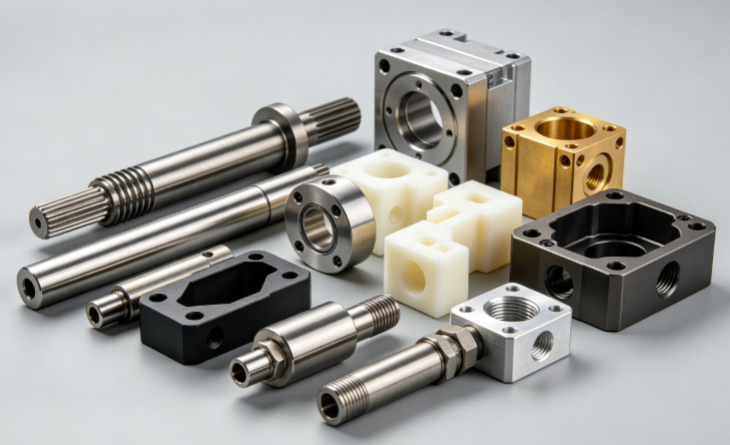
Table of Contents
1. Overview of Custom Precision Mechanical Components Manufacturing
2. Main Product & Processing Scope
3. Global Market Analysis for Custom Precision Mechanical Components
4. Key Technical Specifications for Precision Mechanical Components
5. Core Strengths of Modern Custom Machining Manufacturer
6. Complete Quality Assurance & Inspection System
7. Standard Custom Machining Project Workflow
8. Typical Downstream Application Industries
9. FAQ
H2: 1. Overview of Custom Precision Mechanical Components Manufacturing
Custom precision mechanical components are tailor made parts produced via CNC machining, turning, milling, grinding and other subtractive manufacturing processes. These components are widely adopted when standard off the shelf parts cannot satisfy unique assembly, dimensional tolerance or structural requirements of industrial equipment.
A modern manufacturer integrates advanced processing equipment, mould free rapid prototyping, material selection optimization and strict metrology inspection. It delivers one stop OEM & ODM service from drawing review to finished product delivery, helping industrial clients shorten new product development cycles and stabilize component quality for end equipment.
H2: 2. Main Product & Processing Scope
H3: 2.1 Custom Machined Mechanical Components
CNC turning & milling parts: shafts, bushings, brackets, housings, adapter blocks, connecting structural pieces High precision grinding components: surface ground, cylindrical ground parts with tight tolerance requirements Complex multi axis machining workpieces: irregular structure, cavity parts for sophisticated equipment
H3: 2.2 Available Processing Materials
Metals: carbon steel, alloy steel, stainless steel, aluminum alloy, brass, copper, titanium alloy Engineering plastics: POM, PEEK, PC, nylon and other high performance plastic blanks
H3: 2.3 Secondary Supporting Services
Surface treatment including plating, anodizing, passivation, sandblasting, heat treatment; deburring, cleaning and assembly related auxiliary processing.
H2: 3. Global Market Analysis for Custom Precision Mechanical Components
The global custom precision mechanical components market reached USD 74.36 billion in 2025. Driven by industrial automation, new energy equipment, medical devices and semiconductor related manufacturing, market demand for high tolerance custom machined parts keeps rising.
表格
Downstream Industry | 2025 Market Share | Core Technical Requirements |
Industrial Automation & Automation Equipment | 36.1% | High dimensional repeatability, wear resistant custom mechanical parts |
New energy & Automotive Equipment | 25.4% | Light weight alloy components, stable batch consistency for mass projects |
Medical & Semiconductor Auxiliary Equipment | 22.7% | Ultra tight tolerance, high cleanliness precision machined components |
General Machinery & Instrumentation | 15.8% | Cost balanced custom mechanical spare parts |
Manufacturers with both prototype sampling capability and mass production capacity gain greater competitive advantages in global B2B procurement.
H2: 4. Key Technical Specifications for Precision Mechanical Components
1. Dimensional tolerance: micron level tolerance control for high precision workpieces; reasonable tolerance matching for general mechanical parts
2. Material performance: mechanical strength, hardness, wear resistance, corrosion resistance matching service environment
3. Surface quality: surface roughness Ra value, burr free edge, no processing defects
4. Secondary performance: heat treatment hardness, anodizing / plating surface quality as required
5. File compatibility: support 2D drawings, STEP / IGES 3D models for custom development
H2: 5. Core Strengths of Modern Custom Machining Manufacturer
Diversified processing capacity: 3 axis / 4 axis / 5 axis CNC machining, turning, milling, grinding compound processing Wide range material adaptability: process various metal alloys and high performance engineering plastics Flexible order mode: support prototype sampling, small batch trial order and large volume serial production Professional DFM review: provide manufacturability feedback, optimize structure and tolerance for customer drawings Complete supporting resources: cooperate with qualified vendors for heat treatment and multiple surface treatment processes Export oriented service: supply inspection reports, material certificates to meet overseas audit requirements
H2: 6. Complete Quality Assurance & Inspection System
1. Raw material incoming verification: material certificate checking for metal and plastic blanks
2. First article inspection before formal batch production
3. In process inspection: caliper, micrometer, height gauge, CMM coordinate measuring machine, roughness tester
4. Appearance inspection: check for burrs, scratches, tool marks and surface treatment defects
5. Key dimension full sampling or spot check testing according to customer requirements
6. Batch wise document archiving for full traceability
H2: 7. Standard Custom Machining Project Workflow
1. Customer submit 2D drawings, 3D models or physical samples, clarify material, tolerance, surface treatment and order quantity
2. DFM manufacturability assessment, quotation & technical confirmation
3. Prototype sample production for customer validation
4. Adjustment if sample modification is needed
5. Formal batch production with in process quality monitoring
6. Finished product inspection, packaging and shipment
H2: 8. Typical Downstream Application Industries
Industrial automation: automation equipment jigs, fixtures, transmission mechanical components New energy & automotive: new energy equipment structural parts, auto equipment custom mechanical accessories Medical equipment: non standard mechanical parts for medical auxiliary instruments Semiconductor & testing instrument: precision custom mechanical housings and connecting components General machinery: engineering machinery, instrument equipment custom spare parts
H2: 9. FAQ
H3: Q1: What drawing formats are accepted for custom precision mechanical components?
A: PDF / DWG 2D drawings, STEP, IGES 3D models or physical reference samples are all acceptable.
H3: Q2: Can you handle both prototype sampling and mass production orders?
A: Yes. We support one off prototype development, small batch trial and large volume serial production for different project stages.
H3: Q3: What problems may occur from poor quality custom mechanical components?
A: Dimensional out of tolerance leads to assembly jam; insufficient material hardness causes rapid wear; poor surface quality affects equipment operation accuracy and service life.