
October 15, 2026
CNC Precision Machining: Processes, Material Tolerances and Industrial Uses
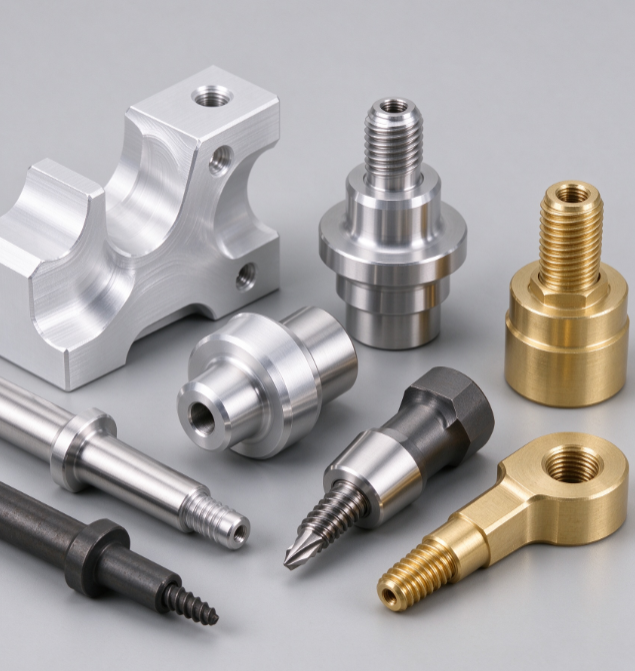
Table of Contents
1. Understanding CNC Precision Machining
2. Common CNC Precision Machining Processes
3. Material Tolerance Performance Comparison
4. Key Features of Precision CNC Parts
5. Core Industrial Applications
6. Frequently Asked Questions
1. Understanding CNC Precision Machining
CNC precision machining is a computer-controlled manufacturing process. It remove material from solid blanks to make high-accuracy custom parts.
This precision fabrication method follow digital CAD design files strictly. It eliminate most manual machining errors.
Precision CNC machining focus on tight dimensional tolerances and smooth surface finishes. It produce parts that standard machining cannot achieve.
It support low-volume prototyping and mass industrial production. It keep consistent quality across every production batch.
2. Common CNC Precision Machining Processes
2.1 Precision CNC Milling
CNC milling use rotating cutting tools to shape flat and complex part surfaces.
3-axis and 5-axis milling machines handle irregular geometries and multi-sided features.
It is the most widely used process for custom precision component manufacturing.
2.2 Precision CNC Turning
CNC turning rotate solid material rods against fixed cutting tools.
This process create cylindrical parts like shafts, bolts and tubular fittings.
It deliver excellent roundness and dimensional stability for rotary components.
2.3 High-Precision Drilling & Tapping
Precision drilling and tapping produce accurate holes and thread structures.
It ensure perfect assembly matching for mechanical and electronic parts.
Tight hole position tolerance is critical for high-precision equipment assembly.
3. Material Tolerance Performance Comparison
Different engineering materials show different precision limits during CNC machining. Material hardness and thermal expansion directly affect final tolerance accuracy. The table below shows industry verified practical tolerance data for common materials.
Machining Material | Standard Machining Tolerance | Ultra-Precision Tolerance | Main Machining Challenge |
6061 Aluminum | ±0.05 mm | ±0.02 mm | Thermal expansion causes minor dimensional shift |
7075 Aluminum | ±0.05 mm | ±0.025 mm | High cutting stress leads to slight part deformation |
304 Stainless Steel | ±0.06 mm | ±0.03 mm | Work hardening increases tool wear |
1018 Mild Steel | ±0.05 mm | ±0.025 mm | Predictable thermal deformation during cutting |
Brass Alloy | ±0.04 mm | ±0.02 mm | Soft texture may cause tool scratching |
Brass and 6061 aluminum have the best machinability. They support the tightest ultra-precision tolerance in standard workshop conditions.
Stainless steel need stable cooling and low feed speed. It easy to produce hardening layers that reduce precision.
Professional tests show 5-axis CNC precision machining can keep IT6–IT7 grade tolerance for qualified parts, which meet high-end industrial standards.
4. Key Features of Precision CNC Parts
4.1 Ultra-Tight Dimensional Accuracy
CNC precision machining maintain micron-level accuracy. It fit precision assembly requirements.
Batch parts have almost no dimensional deviation. Assembly fitting rate reach nearly 100%.
4.2 Superior Surface Finish
Precision cutting parameters reduce tool marks and surface burrs.
Finished parts achieve smooth surface roughness without extra polishing work.
4.3 High Design Flexibility
The process support complex 3D structure machining. It produce custom parts that manual processing cannot finish.
Design modification only need updated CAD files. No expensive mold adjustment needed.
5. Core Industrial Applications
5.1 Aerospace Industry
Aerospace precision components require strict tolerance control.
CNC precision machining produce lightweight and high-strength structural parts for aircraft equipment.
5.2 Medical Equipment Manufacturing
Custom medical device parts use precision CNC machining technology.
High surface precision avoid residue and bacterial growth for medical tools.
5.3 Automotive & Electronics Industry
Precision gears, shafts and electronic shell parts rely on CNC precision machining.
Stable part precision ensure long-term stable operation of mechanical and electronic equipment.
6. Frequently Asked Questions
Q1: What tolerance can standard CNC precision machining achieve?
A1: Standard precision machining reach ±0.05mm tolerance for most metals. Professional ultra-precision processing can achieve ±0.02mm tight tolerance for aluminum and brass materials.
Q2: Which material is the easiest for CNC precision machining?
A2: 6061 aluminum and brass alloy have the best machinability. They have low deformation and stable cutting performance, ideal for high-precision custom parts.
Q3: What is the difference between CNC milling and CNC turning?
A3: CNC milling process flat and irregular shaped parts. CNC turning focus on cylindrical and rotary parts. Both support high-precision customization for industrial use.
Q4: Can precision CNC machining support small batch orders?
A4: Yes. CNC precision machining has no mold cost. It fully support prototype testing and small-batch customized production with stable precision.